






Inside the Expanding Role of Philanthropy in the Art World
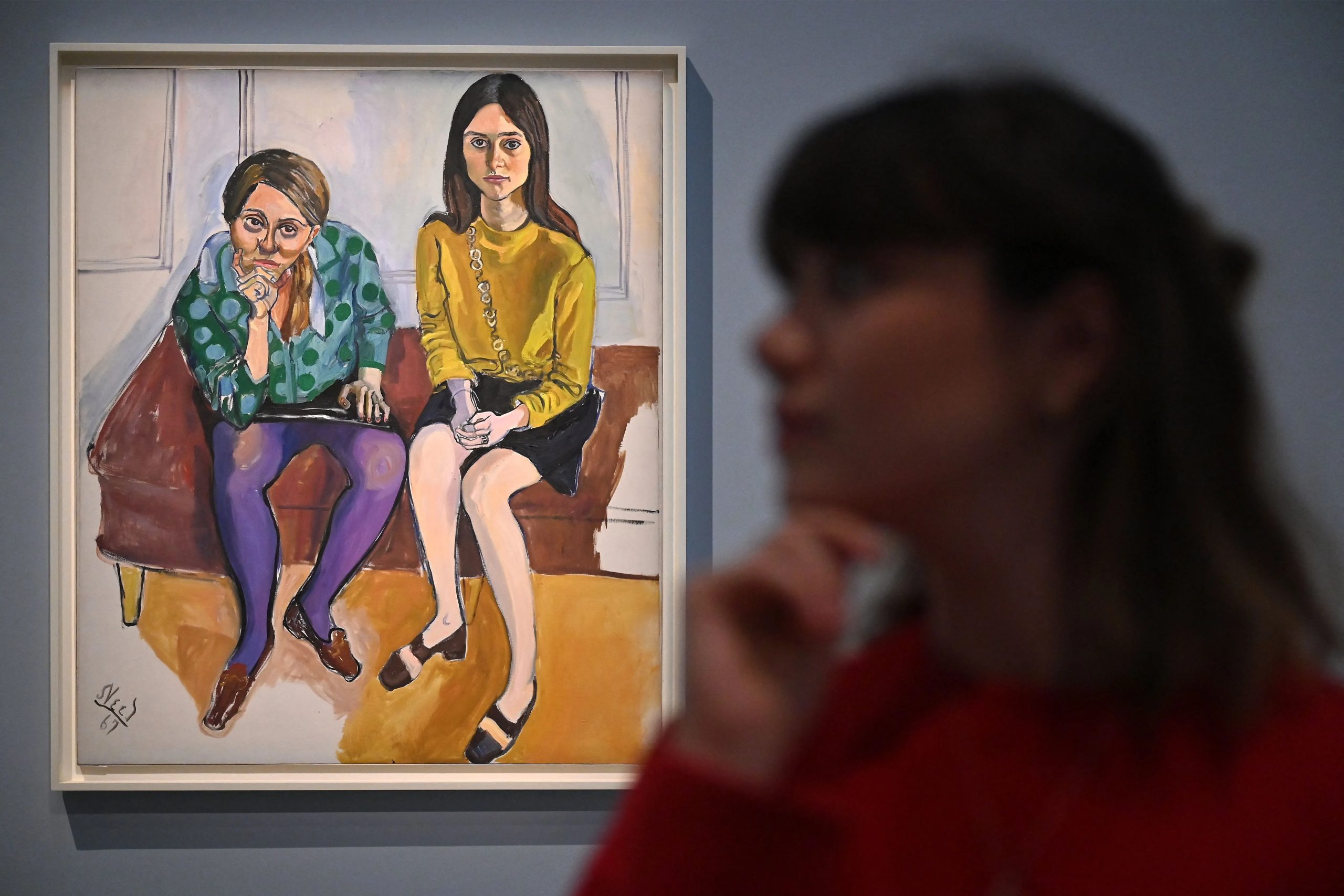
From museum benefit auctions to new institutions, philanthropy has become a structural force shaping how art is funded, presented and sustained. Wellesley Girls (1967) by Alice Neel. Justin Tallis/AFP via Getty Images
Philanthropy has long been a vital force in the art world, but in recent years its scope, ambition and social impact have expanded markedly. What was once primarily associated with patronage—individual donors underwriting acquisitions or exhibitions—has evolved into a more complex, systems-oriented practice. As the global art ecosystem becomes more interconnected, philanthropic initiatives are increasingly shaping institutions, supporting cultural infrastructure and extending the social reach of art beyond traditional audiences. From underwriting exhibitions and education programs to enabling ambitious new cultural ventures, philanthropy now functions as a structural force that influences both art market dynamics and civic and social outcomes at large.
The shift reflects broader changes in how cultural value is understood and sustained. Public funding for the arts remains uneven and, in many regions, insufficient to meet the demands placed on museums and cultural organizations. At the same time, audiences are asking more of institutions: greater accessibility, deeper engagement with social issues and more representative narratives. Philanthropy has increasingly stepped into this gap as a form of risk capital that allows institutions to experiment, expand or recalibrate their missions in response to a changing world.
Recent philanthropic initiatives connected to events such as the Norton Museum Benefit Auction in Palm Beach, the Art of Wishes Auction in London and the opening of the Female Artists of the Mougins Museum (FAMM) in France illustrate how these dynamics play out in practice. Together, they point to a model of philanthropy that is less transactional and more embedded, supporting the underlying conditions that allow cultural ecosystems to thrive.
The Norton Museum Benefit Auction in Palm Beach offers a clear example of how targeted philanthropic support can strengthen local cultural ecosystems. The Norton Museum of Art, South Florida’s oldest art museum, relies on its annual benefit auction to fund acquisitions, exhibitions and educational programming that serve a broad and growing public. Recent editions, hosted by Sotheby’s, have brought together works donated by leading contemporary artists and galleries, generating essential revenue for an institution that serves as a cultural anchor and civic forum. The 2025 auction, for instance, featured more than 40 works spanning painting, sculpture, photography and other media, underscoring the breadth of artistic engagement that such initiatives can mobilize.
Crucially, proceeds from auctions of this kind flow directly into curatorial, learning and community engagement initiatives. These funds support school partnerships, public access programs and outreach efforts that extend well beyond the museum’s walls. In this way, philanthropy acts as a multiplier: enabling institutions to maintain curatorial ambition while expanding their capacity to serve diverse audiences. The impact is not limited to high-profile exhibitions, but felt in the long-term work of education, access and community trust-building that sustains relevance over time.
Behind the scenes, such initiatives often depend on the contributions that are less visible but no less consequential. Auctions and charitable exhibitions regularly rely on specialized expertise—logistics, transports, storage, installation and deinstallation—provided at reduced cost or as in-kind support. By lowering operational costs, these contributions allow a greater share of funds raised to be directed toward institutional missions rather than overhead. In an art world where the cost of moving, insuring and caring for works continues to rise, this form of support represents a critical, if often overlooked, dimension of effective cultural philanthropy.
Philanthropy also operates on a global scale, connecting art to humanitarian and social causes across borders. In London, the Art of Wishes Auction illustrates how art-driven fundraising can translate into highly personal social impact. Founded in 2017 by philanthropist Batia Ofer, the initiative partners with Make-A-Wish Foundation UK to support children with critical illnesses. We at Gander & White have provided support to the Art of Wishes since its inception, offering expertise in the secure transport, installation and safe handling of donated artworks, tasks that require precision when dealing with rare and high-value pieces contributed for charitable purposes. Through the sale of donated artworks by established and emerging artists, Art of Wishes transforms cultural capital into tangible outcomes, demonstrating how the emotional resonance of art can be mobilized for humanitarian ends.
 Larry Gagosian, Bono, Theaster Gates and Sir David Adjaye attend the (RED) Auction 2018 in Miami, Florida. Astrid Stawiarz/Getty Images
Large-scale philanthropic auctions further highlight this model. Events such as The RED Auction in 2018, organized in collaboration with Sotheby’s and Gagosian during Art Basel Miami Beach and Design Miami, have shown how collectors, artists and institutions can align around shared social goals. Gander & White donated global resources across the U.S. and Europe to ensure the smooth transport, storage and installation of works by leading contemporary artists, including Jeff Koons, Ai Weiwei, Frank Gehry and Wangechi Mutu. Proceeds from these initiatives have supported community-driven AIDS programs in Africa as well as cultural development efforts in Chicago via the Rebuild Foundation, reinforcing the idea that philanthropy can bridge art, health and social equity.
Institutional philanthropy is also reshaping museum narratives. The launch of FAMM in France marks a significant intervention in art historical representation. Founded by collector Christian Levett and opened in 2024, FAMM is Europe’s first private museum dedicated exclusively to women artists. Its collection houses nearly 100 masterworks by more than 90 women artists—spanning historical figures such as Berthe Morisot and Mary Cassatt, through mid-century icons like Louise Nevelson, to major contemporary figures including Marina Abramović, Jenny Holzer and Tracey Emin. The museum’s mission is both corrective and forward-looking: to address historical omissions while offering a sustained platform for rethinking artistic achievement. FAMM aims to establish a permanent institutional presence dedicated to visibility, scholarship and public engagement. In this context, philanthropy operates as both support and authorship to shape the narratives that future generations will inherit. Contributions that help build and sustain such institutions, including operational and logistical support, become a part of a longer cultural arc, positioning philanthropy as a force for structural change rather than episodic generosity.
Across these varied examples, a consistent pattern emerges: philanthropy is most effective when it is collaborative, strategically deployed and oriented toward long-term impact. It thrives when financial resources are paired with expertise, when ambition is matched by operational rigor and when cultural goals are aligned with broader social purpose. The art world possesses a unique capacity to mobilize generosity across borders and disciplines. When that generosity is paired with expertise and institutional vision, it can expand access, sustain ambition and reinforce the social fabric that gives art its enduring relevance.
In an era of heightened uncertainty, philanthropy offers not just support, but possibility. It enables institutions to take risks, correct imbalances and imagine futures that extend immediate market pressures. In doing so, it affirms art’s role as a living, social force capable of shaping communities, histories and shared values for generations to come.